When AI answers the buying question, who gets recommended?
Buyers now ask AI assistants for shortlists before they ever search. Citensus is an open research project that measures which brands those answers recommend and which sources they cite, using repeated sampling, confidence intervals, and a published, auditable methodology. It sells nothing. The data and the method are the point.
See it work Pilot benchmark MethodologyWatch the census converge
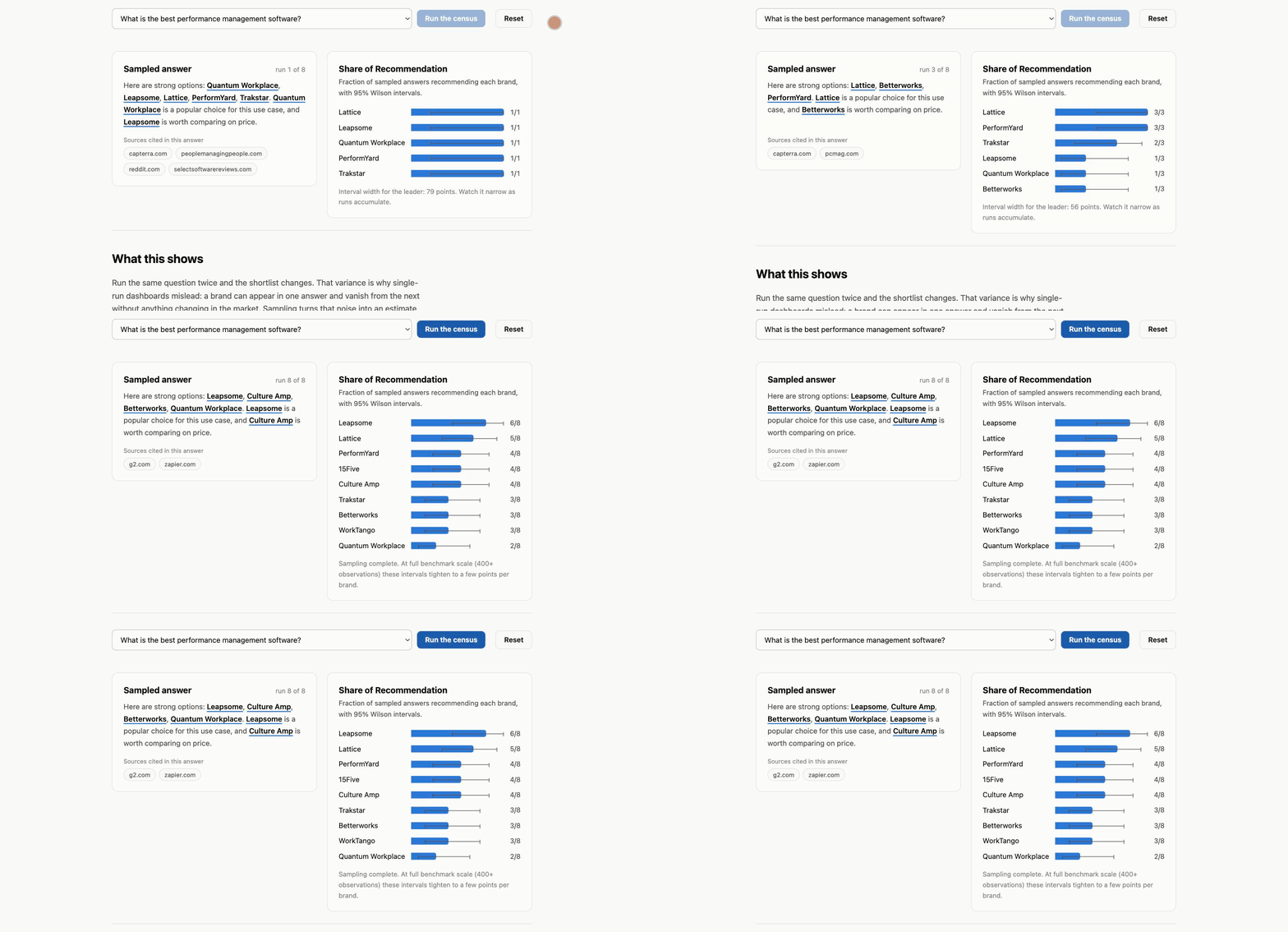
One buyer question, sampled eight times in cold sessions. Each answer's recommended brands are extracted, and the league table converges with 95% intervals. Run it yourself in the interactive demo.
Why measure it this way
AI assistants answer buying questions by retrieving live web pages and recommending a handful of brands. That consideration set is becoming the most valuable real estate in marketing, yet it is usually measured with single runs that mistake noise for movement. Ask the same engine the same question twice and the shortlist changes; nothing about the market moved. Citensus measures it the slow way instead: repeated sampling, stated margins of error, and market-shift controls, with panels and extraction rules published so anyone can check the numbers or re-run them.
What we measure
Share of Recommendation
The probability a brand appears in the recommended set of an AI answer to a buyer-intent prompt, estimated by repeated sampling across a versioned, pre-registered prompt panel.
Citation Share
Which pages and domains actually feed AI answers in a category: the supply-side map. We separate cited sources from merely retrieved ones. The gap is a finding, not noise.
Movement, with controls
Model updates shift answers for everyone at once. We track the full competitive set, so per-brand movement is always reported against the category baseline and never mistaken for market-wide churn.
Who this data is for
Brands
Your board is asking "what does ChatGPT say about us?" The benchmark shows the number, the interval, and the sources behind it.
Publishers
Your pages feed AI answers whether you know it or not. Citation-share data quantifies that influence, including as leverage in licensing conversations.
Researchers and the ecosystem
Agencies, analysts, and academics studying how generative engines recommend. The methodology is public, versioned, and reproducible on purpose.
Transparency
- Citensus sells nothing: no subscriptions, no services, no sponsored placement in the data.
- It is a side project from the team building UpNamed, a GEO services company. That relationship is disclosed here and in every benchmark, and any measured brand with a commercial relationship to UpNamed is flagged in the report.
- Panels, entity lists, and extraction rules are fixed and hashed before results are computed.
- Methodology, panel composition, and extractor code are published so anyone can re-run the numbers.